Andrew Hamm: the Bipolar Express

Ruminations on theatre, music, and just about anything else that crosses my bipolar brain.

Thursday, July 21, 2011

Arkansas Times: "As You Like It" is "a gracious romp".

"As You Like It" a lively production
by Bernard Reed
Arkansas Times
July 6, 2011

Shakespeare, for being the untouchable granddaddy of English-speaking arts and culture, can be remarkably lowbrow. For some, his name makes them yawn and think of incomprehensible soliloquies to skulls and a confusing mess of "thees" and "thous," highfalutin drudge much like opera or Russian literature. Of course, back in his day, the bard wasn't thinking about academic immortality or what Harold Bloom would eventually say about him. He was a simple playwright with the rabble of Renaissance London to entertain — no doubt a tough crowd.

Dan Matisa as Jaques.


Therein lies the amusement of "As You Like It," which has remained a crowd-pleaser since 1600 or so. Much like traveling thespians of yore, the Arkansas Shakespeare Festival took its production of this comedy from Conway to the Argenta Community Theater in North Little Rock for its final weekend of shows.

It's a lively, fast-faced production, with a crew of bumbling, romantic characters who are all ironically fated to go head over heels for each other. Orlando (David Huynh), appropriately wide-eyed and optimistic, is a gentleman of the kingdom who is tormented by his older brother. After defeating the court wrestler in an uproarious and anachronistic showdown, Orlando is exiled by Duke Fredrick (Robert Dillon) and must flee his home into the Forest of Arden, but not before falling in love at first sight with Rosalind (Amy Fritsche), the daughter of a usurped duke. Conveniently, and without reason, Rosalind is likewise banished shortly after. She and her cousin, Celia (Christa Whitlow), along with a bouncy court fool, make haste as well to the Forest of Arden. For protection (but really to line up your typical gender-bending, mistaken-identity Shakespearian gags) Rosalind assumes a man's disguise, adopting the name Ganymede.

Superbly acted and directed, the rest of "As You Like It" is the typical lighthearted pastoral romance. "Ganymede" does "his" merry best to unite a pair of lovesick shepherds, one of whom falls in love with "him" instead. Ganymede also runs into Orlando, who unwittingly confesses his love for Rosalind. An assortment of other forest characters, blessed with their author's sharp-tongued wit, amorously pursue each other, while back in the kingdom Duke Fredrick calculates his revenge against all those characters in the play who are having more fun than him. Finally tiring of her charade, Rosalind drops her disguise and works on making sure that everyone ends up coupled and happy. Spoiler alert — everybody gets married in the final scene.

As enjoyable as he can be, Shakespeare is also dauntingly complex — one wrong move can make him boring and impenetrable. Although at times a bit lightning-quick, this is not a trap that the Shakespeare Festival falls into; it's a gracious romp on the playwright's more high-spirited side. Instead of pondering "To be, or not to be," they frolic in the good news that "All the world's a stage"— a monologue that in this production is both melancholy and humorous, not forgetting its comedy with the fame of its lines.

Unless you're an actor, you may hesitate to say that any work of Shakespeare's is fun; most of the time, that doesn't seem quite the word. But this production of "As You Like It" could be described as such. The actors seemed to be genuinely enjoying themselves, delivering their speeches and asides as much for the audience as for themselves. Scattered with references to the modern day, as well as a live soundtrack of a few eighties pop classics, a purist might not have been amused; but what is Shakespeare if not eternally accessible? It is for the people, the hardscrabble crowds that thronged the Globe Theatre to stand in the mud and get drunk. If Harold Bloom doesn't like it, that's because he was never supposed to.

Here's a link to the original article.

Labels: ,

Sunday, July 13, 2008

Style Weekly: "As You Like It" is "charming, funny, unique, and unexpected"

From Style Weekly online:

The Dance Number Big Willie Didn’t See Coming


Even after a quarter century, Richmond Shakespeare keeps us guessing. Even if we already know who’s really a lady and who’s not.


“As You Like It,” Richmond Shakespeare’s most recent undertaking, is also its oldest.

Eleven years ago, the fledgling company cut into this play, already 400 years old, and have been fine-tuning it ever since. The play, one of Shakespeare’s most frequently performed comedies, has all of the ingredients of a great production: girls masquerading as boys, love triangles (and pentagons, quadrangles and other assorted geometric shapes), an abundance of physical comedy and witty dialogue.

And typical of Richmond Shakespeare’s unwillingness to present the conventional play, directors Andrew Hamm and Julie Phillips (who refer to themselves as the Masters of Play and of Verse, respectively) incorporate thoroughly modern bits into the works, anachronisms dating back as far back as May 2007. Here the cross-dressing comedy includes a large song-and-dance number near the end in which the cast bursts into an impromptu rendition of the “Soulja Boy” dance.

The actors, for the most part, handle their characters beautifully. Sunny LaRose’s Rosalind is strong and endearing, and works well with the love-struck fervor of Orlando (Patrick Bromley). She also has great chemistry with Julia Rigby, who plays her cousin Celia; their scenes are filled with girlish glee and are enjoyable to watch. And as in most of Shakespeare’s plays, the court clown delivers many of the best lines; Adam Mincks’ brilliantly funny Touchstone is definitely up to the job.

But it’s Liz Blake who steals the show. Her role as Amiens in the play’s first half allows her to show off her lovely, lilting singing voice -- this is only topped by her portrayal of the crass shepherdess Phebe, who falls madly in love with the cross-dressing Rosalind, in the second half.

The production is not flawless, though. With the exception of the wrestling scene near the opening, the first half becomes dry whenever Rosalind or Touchstone is not onstage. And while the production’s several musical numbers work well for Blake, LaRose and Bromley each struggle during their few sung lines.

But “As You Like It” is a charming, funny production that bears the unique, often unexpected flavor that Richmond Shakespeare has spent 23 years stewing.

Labels: , , ,

Saturday, May 03, 2008

Review: "Iron Man"

Iron Man
Starring: Rober Downey, Jr., Terence Howard, Jeff Bridges, Gwyneth Paltrow
Directed by: Jon Favreau
Written by: Mark Fergus, Hawk Ostby, Art Marcum, Matt Holloway
Released by: Marvel Studios
Theatrical Release Date: 5/2/2008
Run Time: 126 min.
Rating: PG-13

It is truly a golden age for geeks right now.

Thanks mainly to the unreal successes of the Spider-Man, X-Men and Lord of the Rings film franchises, all the cool stuff I loved growing up and have rediscovered in my adult years has become mainstream Americana, loved by critics and public alike. It’s now just par for the course that the summer movie season would kick off with the screen adaptation of a B-plus-list superhero adventure.

But it’s not par for the course for me, not this time. Because this time it’s Iron Man, my favorite hero and my favorite fictional character of all time.

Of course, for every Spider-Man 2 there's a Punisher, for every Batman Begins there's an Elektra, for every X-Men 2 there's an X-Men 3. So I tend to go into these things with extremely low expectations; I assumed Transformers was going to be a glorious train wreck and was pleasantly surprised at the quality of the screenplay, the acting, and the storytelling.

But for Iron Man, I can't help myself. Tony Stark is, in my opinion, the most complex and interesting character in all of mainstream comics (only Batman is comparable), and the material is far more big-screen-friendly than even Spider-Man or X-Men. The last time I was this excited about a movie was The Lord of the Rings: The Fellowship of the Ring. It’s not just that I really wanted Fellowship to be good, it’s that I knew it could and should be far beyond just "good." With source material and a director of this quality, it should be one of the great films of all time.

Just as with all three LotR films, Iron Man has met my high expectations and hopes and surpassed them. This isn't just a great superhero movie, the best since Spider-Man 2, it's just a great movie by any measure, with masterful acting, a fantastic screenplay, great twists and turns, and a plenty of BTUs (units of Blowing Things Up).

As with Spider-Man's Tobey Maguire, Iron Man is powered by its lead actor, Robert Downey, Jr. Downey surprised me in his portrayal of billionaire genius industrialist Tony Stark; I have always envisioned him as a more hard-edged, intense and direct individual than Downey and director Jon Favreau portray. It's a good thing they made this movie and not me. Downey's Stark is so brilliant he can be casual and sarcastic about it, which not only sets his moments of intensity in great contrast but makes for perhaps the funniest superhero we've yet seen. All of Stark's facets are on display in Downey's performance: his intelligence, his capriciousness, his addictive and obsessive nature, his reckless need for speed, and all of his self-loathing.

And Downey's might not even be the best performance of the bunch. When your supporting cast--for a superhero movie, mind you--involves Oscar nominees and winners like Jeff Bridges, Terence Howard, and Gwyneth Paltrow, you know this is a special project. Bridges stands out in particular; the film's portrayal of Obadiah Stane is not at all what I was expecting, and I barely recognized the bald, bearded Bridges in the part. Howard and Paltrow simply refuse to allow their characters to vanish into the background, and both cast Stark in sharp relief where he would be much less clear alone. It's great news that these actors have apparently signed on for the sequel, and I'm hoping to see other memorable Stark Industries employees like Bambi Arbogast, Abe Zimmer, and Marcy Pearson show up, as well.

There are great shout-outs to Iron Man fanboys like myself: the Ten Rings, Happy Hogan (played by Favreau, who I hope will make a longer appearance in IM2), Tony's Pacific mansion looking like his late-80s comic book digs (from the era when I was first reading the book), and a Stark-against-the-man vibe reminiscent of the seminal Armor Wars storyline of the same time period. Like the great tiny details in the other successful fanboy franchises we've seen succeed, these tell the discriminating geek audience member, "Yes, I love this as much as you do. If I cut something you love, I loved it too, and it hurt me too. trust me, your favorite hero is safe in my hands."

Iron Man also manages the difficult task of making social commentary without being preachy or coming down hard on one side of the political spectrum. Favreau wisely recognizes that we can pretty much all get behind the ideas that collateral damage, double-dealing, and war profiteering are bad things, and Stark's conversion from soulless arms dealer to defender of innocents is portrayed as a deeply personal one, not a political one.

Last week on Doctor Who, David Tennant's Doctor said something that has stuck with me ever since: "Not easy, is it? Being clever. You look at the world and you connect things, random things, and think, 'Why can’t anyone else see it?' The rest of the world is so slow. You’re on your own." In Downey and Favreau's Tony Stark, we see a man with vision so clear and intense that it hurts him; he has to dull it with alcohol, feed it with sexual and expensive thrills, and finally assuage it with actions so big they can only be described as superheroic. Like Batman, Iron Man is chased by personal demons he can never completely escape, but he can't live without perpetually striving against them. Iron Man is a lot more fun to come along for the ride with than Batman, though.

Do NOT leave the theater until after the closing credits. Best. Bonus scene. Ever.

EDIT: Saw it again last night. Still awesome. I'll see it another time or two before it's gone.

Labels: , ,

Saturday, March 29, 2008

Times-Dispatch: "This is as I like it."

From the Richmond Times-Dispatch:

A rollicking version of 'As You Like It'
Saturday, Mar 29, 2008 - 12:08 AM
By SUSAN HAUBENSTOCK
SPECIAL CORRESPONDENT

It was when Adam Mincks went to put on the tulle skirt that things went over the top.

Shakespeare's "As You Like It" depends on gender switching (the heroine, Rosalind, disguises herself as a man), and Richmond Shakespeare often depends on a tiny cast to portray multiple characters without regard to their sex.

But this five-actor "As You Like It" includes enough gender-bending to spin your head around.

It's the tale of Orlando, who falls in love with Rosalind just before she's banished from her uncle's court. She and her cousin Celia flee in disguise to the forest of Arden, where Rosalind's father is in exile.

There they meet various rustics, the clown Touchstone and the sentimental Jacques, as well as Orlando, who escapes to the forest when he learns that his brother is planning to kill him.

Everyone falls in love in the forest, and all ends well (but that's another play).

In this version, the comedy is amplified by quick changes of role that result in, for instance, bearded Patrick Bromley playing a country maiden and Julia Rigby as a lovelorn shepherd.

In Rebecca Cairns' endlessly versatile and lovely costumes, they add a cap here and a wreath there to mark the characters, with the actors' skills making the transformations magical.

As is the company's frequent practice -- at least for its indoor season -- costume pieces are hung in plain sight, so that when Mincks, hilarious here in numerous roles, goes for that skirt, we know that something even more delicious is coming.

Director Andrew Hamm (who is onstage as accompanist) has infused the production with physicality and music, his trademarks.

There's so much roughhousing that a fight choreographer (actor Frank Creasy) and a fight choreography consultant (David White) were needed to plan the action.

And Hamm has provided pleasant melodies so his cast can sing as appropriate. With nonstop energy and an approach to language that is colloquial and deceptively relaxed, Hamm has created a rollicking version of this classic.

Every actor is superb, especially considering the demands of their many roles. Rigby has less flashy parts such as Celia and Silvius, but she is charming. Bromley is romantic as the lovelorn Orlando and ridiculous as the silly goatherd Audrey.

Sunny LaRose is a marvelous Rosalind, brave and emotional and admirable, even when disguised as Ganymede. Creasy is a marvel as he morphs from aged servant Adam to wrestler Charles to emotional Jacques. Creasy is an actor who is always fully committed.

Mincks has a breakthrough performance here as he achieves perfection in a fistful of roles -- Oliver, the cruel brother who has a change of heart; the foppish courtier LeBeau; the dignified Duke Senior; the clown Touchstone; and the tulle-skirted Phoebe.

Mincks changes accents and attitudes with seeming ease; he even appears to change height. This is as I like it.

Labels: , , ,

Saturday, February 02, 2008

Review: Joe Jackson - "Rain"

Joe Jackson
Rain
Ryko, 2008
Produced by Joe Jackson

I am a completely unapologetic fan of Joe Jackson. Ever since Phil handed down his vinyl copies of Night and Day, Look Sharp!, Blaze of Glory, and Body and Soul I have been completely hooked. Joe is simply everything I love about songwriting. He effortlessly jumps genres to serve the story or the vibe, sometimes from song to song on an album, but just as frequently from album to album. From the New Wave energy of his first three albums to jump-swing, Latin-retro and jazz-pop for the next few to concept albums, film scores, avant-minimalism, a Grammy-winning symphony, and a neoclassical song cycle about the seven deadly sins to 2002's orginal band reunion album, there is no modern musical artist who has explored so many musical styles with greater commitment and facility than Joe Jackson. When Joe has a new album coming out, you never know quite what to expect.

Regardless of what I expected from Joe's new piano trio album Rain, what arrived in my mailbox were ten of the most deftly-written, beautifully-played songs of his storied career. Rain is a deceptively simple-sounding album, just Joe on piano, Graham Maby on bass, and Dave Houghton on drums, all three on vocals, produced simply and elegantly with no tricks or gimmicks. It advances Jackson's songwriting while somehow managing to hearken back to his early years and even back to early Steely Dan and '60s jazz-pop. It is a singular album, somehow modern, retro and timeless all at the same time. And I know I say this every time, but it's one of the best works Joe has ever produced.

Every single song is simply great; true of a few of Joe's records, but maybe never since Night and Day to this extent. I think I listened to "Invisible Man," the opening song three or four times before I even moved on to the rest of the album. The track's syncopated groove and odd vocal phrasing are baffling but completely logical at the same time, and the chorus is just fantastic. It's just a great song; I've been singing the chorus to myself for three days. The third track, "Citizen Sane," reminds me (as a lot of the record does) of early Fagen & Becker, and features strong lyrics reflecting Jackson's recent stands against the gentrificaltion of our minds and opinions: "All you kings and martyrs / All the little girls and boys / Will thank you when you start us / Safely on the way to be Citizen Sane."

Sanity and insanity, not so much real as perceived in the eyes of the fun- and thought-police are recurring themes, along with the sadnesses of lost love, from the melancholy of "Wasted Time" (my favorite track on the album, and the first one I'm going to learn to play) to the abject despair of "Solo (So Low)," which made me weep in my car when I first heard it. There's a bit of the goofy Jackson here, in the throwback "King Pleasure Time" and "Good Bad Boy," and sheer grinning playfulness in "Rush Across the Road." The album's most purely delightful track is probably "The Uptown Train," a toe-tapping homage to the '60s Billy Page instrumental "The 'In' Crowd," which Joe covered on 2000's Summer in the City live album.

An entire album of piano, bass and drums has certain sonic limitations, but Joe transcends these with some of the most intricate and subtle arrangements of his career. Key changes and unusual modulations are everywhere, nowhere more beautifully than in the bridge of "Wasting Time." Chord changes seem to come out of nowhere, but when the phrase ends they are obviously the only way the song could possibly have gone. From a pure songwriting perspective, Rain is one of Jackson's greatest triumphs, and that's saying something. I spend almost every moment listening to this album in sheer delight at the magic of its songcraft. It's a collection of music that reminds me why I love music, and makes me want to go out and make my own.

It strikes me every time I hear Joe play a piano-heavy song how much his piano playing resembles mine. Fairly simple left hand (Joe's because he's leaving room for Maby's bass, mine because I'm a lousy pianist with a left hand like a bunch of bananas), song-serving right hand grooves, and big chords under a dominant vocal line. Never has this been so evident as on Rain, where I hear Joe Jackson playing the piano lines I would have played if I had written these songs. Ironically, I do plan for my next studio album to be a piano trio CD, an idea I've had for about 5 years but which has been solidified by just how beautiful Rain is.


EDIT: Raves coming in for Rain!

BBC:
"Joe Jackson returns with arguably his most consistent collection yet."

Slant Magazine:
"It's a terrific set of songs ... The nicest surprise is how good the guy's become at writing love songs ... it's a joy to deconstruct the song's craft."

New York Daily News:
"Joe Jackson plays piano on two levels. The way he performs, the instrument has the kick of rock as well as the sweep of Broadway. As both a writer and a player, Jackson is terse in his intonations, but broad in his melodic sense. His work can be tough and beautiful at once. It's hard to miss all that when spinning his latest CD, "Rain," which you should do often.... 'Wasted Time' feels like a classic.... Given the dash of his tunes, and the theatricality of his playing, one wonders why this ambitious man has yet to pen a musical. If Duncan Sheik can do it with 'Spring Awakening,' surely the artist behind 'Rain' can, too." (Thanks, Daily News. I've been saying that for years! Fortunately, a Dracula musical is Jackson's next project.)

Bullzeye.com:
"...finds Joe Jackson at his absolute, shimmering best.... The coolest part of Rain, though, might be the musical breadcrumbs Jackson drops in his songs, inviting us along on tour of the many and varied influences from which the accomplished songwriter/piano man draws."

Labels: , ,

Monday, July 16, 2007

Times-Dispatch Review of "Henry IV, Part 1"

Link to the review.

The text:


City Production of Henry IV, Part 1 Is an Ambitious Success

By SUSAN HAUBENSTOCK
SPECIAL CORRESPONDENT

Young Prince Hal may be lacking in ambition, but Richmond Shakespeare Festival surely is not.

Having put off the staging of the Bard's history plays, Richmond Shakespeare now plans to mount the whole canon in the coming years. Difficult for audiences who are not familiar with the arcana of Plantagenets and the like, the histories nonetheless are loaded with pleasures for all who love theater.

This first part of "Henry IV" features a familiar figure -- the wastrel son of a powerful man. King Henry has seized power in England but is embattled on many fronts, and it doesn't look as if he's going to get much help from his son Hal.

We meet Hal as he's wenching in a tavern, attended by his instructor in debauchery, Sir John Falstaff. Falstaff is that great Shakespearean character that goes well beyond comic relief -- he's a lovable rogue and a feast for an actor. And in this production, the terrific Daryl Clark Phillips eats up the role with Falstaffian gusto. As good as most of the other actors are, we long for Clark when he is absent and are as delighted as Falstaff's own pals are when he appears again.

Hal's conceit is that his low habits are beneficial in that they'll provide extra contrast once he reforms and takes his rightful place as son and heir, but we're meant to doubt this. Fortunate, then, that the intense Phil Brown makes this eventual transformation absolutely believable -- we see the sudden evolution of Hal from callowness to nobility. Brown gives a delicious performance: sexy, funny, and heroic.

And that's not the last of the acting delights to savor here. James Ricks does a powerful take on Hotspur, the challenger to Henry's throne who's so noble and valiant that Henry openly longs that Hotspur and Hal had been switched at birth. Ricks' performance seems oddly modern, perhaps due in part to his relentlessly American accent in the face of the English accents around him.

And then there is Grant Mudge, playing the rogue Ned Poins as well as Owen Glendower, the Welsh magician, and the Scottish warrior Douglas, with enough of a burr to power two productions of "Macbeth."

Jack Parrish is both regal and thoroughly human as the king, anguished over his rebellious son as much as over the rebellious factions facing him. Jacqueline O'Connor's jocular turn as Mistress Quickly, the tavern owner, is well balanced by her strong cross-gendered Captain Blunt, and Robert Nelson, John Witkiewicz and Brian Vrtis are excellent in various secondary roles.

James Alexander Bond, as Master of Play, keeps the emotional pitch and the pacing ideal, but fight director Drew Vidal's battle scenes are not fast-paced enough to thrill. Joanne Zipay's work as Master of Verse is obvious in the finely tuned diction and the beautiful rhythms of the poetry, which make the language shine throughout.

Labels: , , ,

Wednesday, June 27, 2007

"Style" Reviews "The Tempest" At Last!

With a lovely picture of Stephen Lorne Williams looking properly cantankerous, Style Weekly has at last deigned to print David Timberline's review of The Tempest.

As with so many others (including myself), Mr. Timberline likes Graham Birce a lot. He says: "...it’s this production’s Ariel, played by the remarkable Graham Birce, who infuses significant charm and vigor into the proceedings. ... Birce moves about spryly in black Converse sneakers, plays violin beautifully, sings enchanting songs, and even walks on stilts." The fact that the review also remarks on Dave White's Caliban makes me sad that Mr. Timberline couldn't be there to see the Birce/White two-actor Doctor Faustus.

It's a shame Mr. Timberline has such a short column length for his reviews. So much time has to be spent on essential story detail that wonderful performances like Frank Creasy's, Freddy Kaufmann's, and Lucas Hall's don't get a mention.

You'll just have to come see the show, start your own blog, and write your own review.

Labels: , , ,

Thursday, March 22, 2007

Style Weekly Reviews "Twelfth Night" ...sort of

It's a full-page picture with a blurb.

Here's the picture they chose:


And here's the whole review:

Girls Gonne Wilde
by Amy Biegelsen

Get this: Countess Olivia loves Cesario, who is actually Viola, who has been dressing in drag since getting washed ashore in the shipwreck that separated her from her brother Sebastian. Both siblings are played by the same actress, which leads to some girl-on-girl kissing, which, on opening night, led Delegate Bill Janis (R-Goochland) to avert his gaze and blush back at the actors from the front row. Sounds like a daytime soap setup, but Richmond Shakespeare Theatre’s production of “Twelfth Night” is better for your brain. Because there’s so much ornament and detail laced into Shakespeare’s comedy, the company moves everything out of the way of his words. With minimal props, crafty musical interludes and a bowling-lane-style stage — the audience sits on either side of the action — the cast gets plenty of room to play. The company performs “Twelfth Night” at Second Presbyterian Church at 8 p.m. Thursdays-Saturdays (with an additional 2 p.m. show Saturdays) through March 31. Tickets are $13-$24. Call (866) 227-3849 or visit www.richmondshakespeare.com.

That's it. One paragraph, a fairly awful picture, almost no analysis whatsoever, and the only name mentioned is that of an embarrassed Republican.

Once again, I'm in the strange position of complaining about an ostensibly good review. At least I think it's a good review; there really aren't any qualitative judgments in it except that we "move everything out of the way of [the] words," we "[get] plenty of room to play," and that we're "better for your brain" than a daytime soap opera. (Of course, the latter may just be because we're doing Shake-speah.)

I know that Style is going through an editorial upheaval right now, but can't that full page be used to print, I don't know, an actual review of the play? Style used to be the paper of record for the arts in this town, and I just expect better than this.

When all of the complexity and delight of freaking Twelfth Night is reduced to a single moment of girl-on-girl action that scandalized a politician in the front row, I'm pretty much ready to stop reading.

Labels: , , ,

Tuesday, February 20, 2007

Andrew's Top Ten Superhero Movies

I've been geeking it out bigtime lately, with the December releases of Superman Returns and Superman II: The Richard Donner Cut inspiring quite a lot of comic movie viewing. I thought "Why not create a pompous and self-satisfying list of Superhero Movies?" So here it is. This is my Top Ten, and it does not purport to be anything deeper than that. So read, enjoy, and discuss.

Here were my rules: the movies in question needed to be either based on comic books, have comic books based on them, or be unquestionably comic-inspired. Note that I haven't yet seen V for Vendetta, though it's sitting on my DVD shelf (thanks, Ichabod).

10. Darkman. Sam Raimi kicks off the list with this masterful, over-the-top Liam Neeson vehicle. Yes, long before Kinsey and Schindler's List, Neeson played Doctor Peyton Westlake, whose face and feelings were stolen by evil gangsters. Unable to feel pain, fueled by adrenaline, and prone to serious furniture-chewing, Darkman followed the original Batman film, faring much better than Judge Dredd in trying to establish a new superhero franchise (two made-for-cable movies starring The Mummy's Arnold Vosloo followed). Awesome visuals, a great new superhero character, Larry Drake and Frances McDormand, and one of the great chase scenes of all time (a helicopter chased by a guy swinging from a rope behind it). But it's Neeson's unashamed super-overacting that makes this film work; a masterpiece of melodramatic voice-acting necessitated by a series of face-obscuring masks. Take that, Shatner! If you're a fan of Spider-Man, see this one as soon as you can; it presages director Raimi's best mainstream work.

9. The Incredibles. Pixar's animated classic was a massive Fantastic Four ripoff, there's no doubt about it, but it's such a great film that I can't find it in my heart to take offense. How this film can be so family-friendly while simultaneously sophisticated is a marvel, though I suppose I shouldn't be surprised; it's directed by Brad Bird, who directed The Iron Giant, one of animation's best films ever. Believe it or not, The Incredibles covers more than a few of the same issues as adult works like Watchmen, Kingdom Come, and Squadron Supreme, and serves as a fairly good primer to the world of reading modern comics. All four principals are excellently developed, as is the villain, and Edna Mode (voiced by Bird) is one of my favorite film characters ever. The voice acting is topnotch, and Bird's combination of retro design and storytelling is part of what makes him one of the best directors in the history of animated film.

8. Daredevil: the Director's Cut. I think Karen and I were the only two people who even liked this film. Not liked, loved. I'm no big Ben Affleck fan, but I found this film to be superb, full of drama and pathos, and loaded with great acting performances. I love the visual style of the film, I love the score to pieces, and the representation of Daredevil's sonar-sense is one of my favorite movie effects of all time. Affleck's performance is more than credible, and Colin Farrell personifies Bullseye's brilliant mania. Jennifer Garner is strong as Elektra (at least this time). The soundtrack rocks (introducing us all to Evanescence) and is perfectly in line with the tone of the movie. The director's cut DVD is superior to the theatrical release, returning a cut subplot, fleshing out some characters, and making Elektra a bit less of a ho. It's possible that my love for this film is due to my having very limited knowledge of Daredevil; I've read very little.

7. Hellboy. Guillermo Del Toro is quite the Hollywood hero right now with Pan's Labyrinth, but I could have told you he's a visual storytelling genius years ago. There are visuals in this movie that will haunt me for the rest of my life; Kroenen in particular is one of the most viscerally disturbing things I've ever seen. Del Toro gets Hellboy's lunchpail approach to paranormal investigation just right; casting Ron Perlman as H.B. is nothing short of genius (Bruce Campbell would have been pretty funny, though). The movie deviates substantially from Mignola's comic, and answers questions Mignola still hasn't addressed in print form, but it was all done with his input, so it's all good. Del Toro has a great grasp on the look and feel of Hellboy, and it all comes out as a hell of a fun movie, the perfect mix of goofy and gory, frightening and fantastic. Also, anything with Jeffrey Tambor in it rules.

6. Spider-Man. I'm a huge fan of James Cameron, and was crushed when he gave up on this project, but now it's impossible to imagine anyone but Sam Raimi directing this. The Spider-Man franchise has become the unquestioned gold standard for modern superhero movies. Raimi builds the entire film around the inextricable links between the Peter Parker's personal life and hero life, just as Sten Lee did the original comic and Brian Michael Bendis does with Ultimate Spider-Man. Raimi gets it, the central issue that the Spider-Man mythos is much more about the man than the mask. We can all identify with Peter Parker, the awkward lonely outsider who feels unworthy to even ask the girl he desperately loves out on a date. Spider-Man makes the viewers feel like they should be heroes in their own lives, that power of any kind carries responsibility to use it for the betterment of all. The stupid plastic Green Goblin mask is more than compensated for by the upside-down-kiss-in-the-rain scene.

5. Batman Begins. Finally, we have a director who wants to tell a Batman story, not manipulate Batman into looking like something they want (Bat-Scissorhands? Rubber nipples? Come on, guys.). Finally, we have a Batman who has the physical and emotional presence to be plausible as Batman and Bruce Wayne, something neither Keaton, Kilmer, or Clooney could do. And finally, we have a story that understands the central truth of Batman, that (unlike Spidey) Batman is his real identity and Bruce Wayne is the mask. Christopher Nolan weaves a powerful origin story, one that justifies Batman's superhuman skill and drive while leaving very human vulnerabilities. Christian Bale is the perfect Batman, strong and confident, stoic and devilishly determined, but still a badly damaged child at his core. Using character templates from Frank Miller's Batman: Year One is a stroke of genius. Batman is DC's antihero hero, and he should be closer to the Punisher than Captain America. When Batman roars, "Do I look like a cop?" we think he just might let Flass drop, and we're a bit disturbed by how much we wanted him to. Perfect.

4. The Matrix. Here's the choice that you're going to scream about. Make no mistake, The Matrix is the most influential sci-fi movie since Star Wars. Look at nearly every single action movie since its 1999 release (including many of the films on this list) and you will see filmmakers finding ways to justify their heroes having mad martial arts skills. Look at the same movies and you'll see wire work, CGI, and camera moves taken straight from the Wachowski brothers' masterpiece. That would be enough to put The Matrix high on this list, but what makes this film stand out is the essential nature of all the whiz-bang. Like Star Wars, The Matrix is a story that would be impossible to tell effectively without every ounce of technology and choreography it used. It's that rarest of the rare: massive effects technology being used purely in service to story. The fact that it's whiz-bang amazing is almost secondary, or rather the effects are whiz-bang because it's a whiz-bang effects story. The characters and the acting are flat in places, though I want to go on record as saying I really like Keanu Revves' performance in all three films. But the film's cyberspace-superhero imagery is like nothing before, and no one has come close since.

3. X-Men 2. Bryan Singer channels Chris Claremont, then leaves us hanging. Not that I didn't love Superman Returns, but I sure would have liked to see Singer's Phoenix story, especially since the X-Men 3 Phoenix effect had absolutely no visual similarity to the one established in this film. But this story is awesome, epic and complex, full of twists and turns and unlikely alliances, and loaded with great action (something Singer isn't always great at). Singer knows something a lot of other comic book movie-makers don't: how to tell a story with a lot of characters. While Wolverine is unequivocally the star of all three X-Men films, the second has interesting storylines for all of the primary and secondary characters. And he even has the sense to get Cyclops, a chronically static character since the 1960s, out of the way for a while.

2. Superman: the Movie. Richard Donner's messianic ode set the stage for all the other films on this list. Come on, Christopher Reeve and Margot Kidder? A complete delight, and a very tough act for Brandon Routh and Kate Bosworth to follow. Bosworth, in particular, was just doomed from the start. Some aspects of it look quite dated today--not the effects; I'm completely captivated by the flying, the heat vision, and the Kryptonian technology. But the cinematography and dialogue style are very 1977. All of this film's failures, and there are more than a few, are more than canceled out by John Williams' score, perhaps the most perfect fit in movie history. Only Superman could have that theme. The Salkinds have a long and storied history of creating B-movies, and they pretty much destroyed this franchise immediately after beginning it, but what a beginning.

1. Spider-Man 2. Simply the best of the best, just a magnificent film in every way imaginable. Sam Raimi appears on this list three times, and just seems to get better with every film. But this is the superhero magnum opus to date. No comics character has ever had his dual identities so dramatically tied together, and no superhero movie has ever dealt so touchingly with the personal consequences of having superpowers. As great as the first Spider-Man film is, this one is a huge step forward in every way, from supercool action to the delicate simplicity of a girl-next-door crush. Spider-Man 2 is a perfect movie. Fantastic acting from all of the leads, a great screenplay, and wonderful effects. The scene with the New York subway riders passing the unconscious Spidey back through the car is iconic, a moment of connection between the superhuman and the supremely human. Spider-Man 2 makes us look at the heroes in our lives and the hero in our own hearts.

Honorable mentions, either really good superhero films or great films that just aren't genre-specific enough:

Mystery Men. An unbelievably funny movie, only missing the list because I just couldn't bump anything. Thanks to Chris Anthony of Shakespeare Festival L.A. for reminding me of this gem.

Robocop. Better than a lot of the movies on this list, but more pure sci-fi than superhero film. Boy, Paul Verhoeven would be a great director for The Punisher or Deadpool.

Superman II. Both versions are great. Donner's is more pure, but I kind of miss the Lester comedy. Kneel before Zod!

Batman. Michael Keaton is just terrible casting. So, I still insist, is Jack Nicholson, who's too little Joker and too much "Just Jack."

Batman Returns. A very strong film, probably #11 or 12 on this list. Too many characters, though, and I get tired of every Tim Burton film looking and feeling like every other one. (Except Big Fish and Pee-Wee's Big Adventure.)

X-Men. Singer wisely treats the X-Men's story more like sci-fi and less like a comic book. He juggles all the characters far better in the second film.

X-Men 3. Phoenix is terrifying, and the action is among superhero movies' best ever. Could have used about 20 minutes more character development.

Aliens. If Ellen Ripley isn't a superhero, no one is. Game over, man.

Superman Returns. A very good movie, and a welcome return. But Superman having a child out of wedlock betrays a serious lack of character comprehension on Bryan Singer's part.

Hellboy Animated: Sword of Storms. The launch of a new series of straight-to-DVD Hellboy movies bodes well for the series.
So that's-a my book. Pretty good, eh Steve?
Let the complaining and arguing begin!

Labels: , , ,

Tuesday, January 23, 2007

Movie Review: "Pan's Labyrinth"

Usually I restrict my movie reviews to 100 words, but in this case I needed to not be limited.

Here’s what I didn’t know about Pan’s Labyrinth (El Laberinto del Fauno) before seeing it:

1) It’s much less fantasy than it is a real-world story with horror elements, and the violence is brutal. This movie is not for the squeamish.

2) It’s entirely in Spanish with subtitles.

Now, neither of these things is a bad thing in and of itself. But the film is being marketed a certain way, and it’s really quite dramatically not the movie it’s being billed as.

Then again, I don’t know how you would sell this movie. Moviefone has it listed as "Drama, Fantasy, Crime and Mystery." (How vague is that?) Rotten Tomatoes calls it "Horror/Suspense." This movie really is that hard to categorize. Do you sell it as a brutal snapshot of post-Civil War Spain? Do you sell it as the story of a lonely little girl and her pregnant mother on an isolated rural military base? Do you sell it as a post-9/11 allegory of military fascism set against the backdrop of a mysterious stone labyrinth whose origins no one seems to know or care about?

Guillermo del Toro’s film is all of these things. It is also an absolute masterpiece, one of the most brilliantly-crafted films I’ve ever seen, and well deserving the twenty-two-minute standing ovation it received at Cannes.

Like The Fountain, Pan’s Labyrinth is a movie that’s best viewed with few preconceptions, the above details aside. Also like The Fountain, it’s a film that is clearly a project of passionate importance to its director. Del Toro weaves fantasy and horror, suspense and war story, fairy tale and psychological thriller expertly, playing each genre against the others for contrast and complement. Every brutal act and every bit of tenderness come through the screen like a surprise, and the appearance of fantasy creatures is a new thing every time it happens. The fact that the main character is a twelve-year-old girl makes the violence nothing short of obscene.

And what a girl she is. Ivana Baquero plays Ofelia with grace and sincerity seldom seen in adult actors. The last time I saw an actor this young create a performance this affecting was Natalie Portman in Leon (The Professional), and we all know how that career is going. Baquero’s performance, if anything, may be more immediate and honest than Portman’s. Ofelia is our lens, our guide through the terror of the real world and the wonder of the fantastic one. Scenes wherein she speaks to her unborn baby brother are particularly powerful.

Sergi Lopez, Maribel Verdu, and Ariadma Gil round out the principals of the “real world” cast, but discussing their roles in the story would be too spoilerish for this blog. Suffice it to say that all three inhabit their characters with epic passion that never seems at odds with the relative intimacy of the film’s setting. Lopez, in particular, creates a character who inspired, shall we say, vehement response from the audience I saw it with.

And ah, the visuals. Obviously, these are what they’re using to try to sell the film: The ancient, withered Faun, his finger bones protruding. The Pale Man, eyeballs in the palms of his hands. Both of these roles are played by Doug Jones (Hellboy’s Abe Sapien), a mime and physical actor of amazing skill, worth the price of admission for his performances alone. Holy cow, his fingers alone are worth it. But the fantastical elements of the film, while completely compelling, are a much less pervasive influence than you’d think; this is Ofelia’s story and the fantasy setting is the exception, not the rule. Like the violence and blood, the fantasy elements are there to reflect and contrast Ofelia, not to distract or mask anything.

Guillermo del Toro has always impressed me as a kind of Mexican Peter Jackson, a resemblance far beyond the husky frame and wild hair and beard. Both share an aesthetic rooted in horror, a love and respect for epic and myth, and that rare combination: ability to create a visual spectacle and skill at coaching actors (are you listening, George Lucas?). Del Toro, who already impressed the hell out of me with Hellboy, has taken a massive stride with this fearful, wonderful film.

So please, read the two pieces of information above before you go see this film. Had I known how violent Pan’s Labyrinth is, I probably would not have gone to see it. However, that would have been a terrible, terrible mistake.

Labels: ,

Saturday, December 02, 2006

The RTD's Review of "A Christmas Carol for Two Actors"

Congratulations Jen and Grant! A great review of a wonderful performance.

I watched Susan Haubenstock watch the show and was pleased to see she had the same difficulty as I did in getting that silly smile off her face.

Labels: , ,

Monday, October 16, 2006

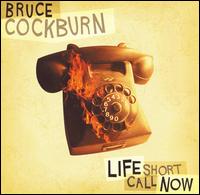
Album Review: Bruce Cockburn - "Life Short Call Now"

Let's be honest: no one buys a Bruce Cockburn album expecting to hear something new. Putting aside the theory that every Cockburn song can be traced back somehow to "The Bicycle Trip," a singer-songwriter with over two dozen albums in his career tends to revisit and repeat themes, ideas, and melodies, and Cockburn's angry-man-with-guitar styles repeat perhaps a bit more than most other artists'. This has never bothered me, however; I like that The Charity of Night reminds me of Nothing But a Burning Light and Dart to the Heart hearkens back to the brilliant Dancing in the Dragon's Jaws. I come to Cockburn again and again for comfortable familiarity, some of the best lyrics ever sung, and the masterful weaving of his guitar and vocal stylings.

So imagine my complete and utter surprise upon listening to Life Short Call Now, an album that manages to show us several new levels of innovation and creativity from Cockburn while remaining reminiscent of the tenderness of distant memories Further Adventures Of and Humans. Gone is the stridency and harshness of You've Never Seen Everything (an album that I find very difficult to enjoy, despite its containing two of my favorite Cockburn songs ever, "Open" and "Put It In Your Heart"). In its place is some of Bruce's most gentle, understated, and soulful songwriting ever, backed by horns and a 27-piece string section, creating--dare I say it?--a music we have never heard from Cockburn before.

The whole darn album is beautiful, a delight and a surprise coming so soon on the heels of YNSE's hard-eyed self-righteousness. After the languid, strolling journey of the title track, Ani DiFranco adds a luscious, airy flavor to the backup vocals of the more urgent "See You Tomorrow." The album takes a big left turn into the campfire song "Mystery," a simple folk tune that builds vocally and instrumentally into archetypal bliss, completely predictable and delightful all at once. "Slow Down Fast" is the album's pulse-racer, appropriately titled and more than a little reminiscent of "Trickle Down" from YNSE. "Different When It Comes to You" surprises me every time I listen to it; it's perhaps the most typical Cockburn song of the bunch, a mish-mash of "More Not More," "How I Spent My Fall Vacation," and "Someone I Used to Love," but it makes me smile every time anyway. Coming only a year on the heels of the instrumental compilation Speechless, it's no surprise to find Life Short home to three excellent and varied instrumentals, the cheery "Peace March," the haunting "Jerusalem Poker," and the creepy-silly bossa nova that ends the album, "Nude Descending a Staircase."

But it's the album's long, slow drinks of music that have made it my favorite Cockburn song cycle in years. "Beautiful Creatures," "This Is Baghdad," and "To Fit In My Heart" are instantly and easily three of the most affecting songs in Cockburn's catalog.

It's long been a pop cliche that when you can't make the music sound big with your songwriting, you hire the string section to fill in the blanks. The obligatory string wash, especially in contemporary Christian music, usually makes me want to bang my head against the floor just to jar the cheese out of my ears. In this case, though, Cockburn employs the strings expertly, adding deeper emotional levels and counter-melodies, rather than using the strings as an expensive Mellotron. Already-beautiful songs such as "This Is Baghdad" and the achingly gorgeous "Beautiful Creatures" are elevated to transcendence by the 27-piece section.

"Beautiful Creatures" may be the most beautiful song Cockburn has written since "All the Diamonds in the World," and it is made all the more vulnerable by his slightly uncertain falsetto vocals. "To Fit In My Heart" and "Beautiful Creatures" have melody structures and intervals I don't think we've ever heard from Bruce, which would be nothing special if they weren't so hypnotic. "To Fit" lingers on the first note in each phrase well after you think it should have moved on, filling a very slow, monotonous song with tension and drama.

Of course, the signature Cockburn guitar loops are there, deceptively complex little patterns of jazzy chords that sound simple on the record, but prove maddeningly difficult when you try to learn them yourself. But the album lacks his other most singular signature; there are no songs with talking in the verses. Usually Bruce is good for two or three talking songs and one or two instrumentals, but I can only assume that after Speechless his mind is on melody. And of course the musicians he surrounds himself with put in masterful performances, Gary Craig's drums, David Piltch's basses, and keyboards of all kinds from Julie Wolf and John Goldsmith never detracting and always contributing to Cockburn's guitars and vocals. Goldsmith also takes on production duties, a welcome change from the last couple albums, where co-producers Cockburn and Colin Linden squashed the life out of even the good songs. Goldsmith's soundscapes are lush without ever seeming remote, even the string and horn sections sounding as intimate as the acoustic guitars and gently-brushed snare.

Lyrically, Cockburn is still Cockburn, the most gracefully blunt poet-songwriter I have ever come across. He illuminates darkness and expresses the inexpressible; he looks in the mirror, doesn't always like what he sees, and forgives himself (and all of us) with a shrug and a prayer. He continues to address everyday experiences with mercy and tenderness, contrasted with rage for oppressive governments and seething over Iraq. There has never been any doubt where Cockburn's political passions lie, and it can make his music hard to listen to if you're remotely conservative or even centrist. But the sociopolitical content on Life Short Call Now doesn't come across as grating or condescending, unlike You've Never Seen Everything, which I find preachy and alienating. This is an artist's passion for what he believes to be truth, and no one can begrudge it him, especially when he expresses it with such brutal beauty. Even explicitly anti-Bush rants such as the (consecutive) "Slow Down Fast," "Tell the Universe," and "This Is Baghdad" should be at least tolerable to the Hannity fan who likes good songwriting.

So go buy this album. Seriously, go get it. Life Short Call Now may be Cockburn's most magnificent achievement since Dancing in the Dragon's Jaws, and it certainly stands strong with the songwriter's best work.

(Mike got it first, by the way.)

Labels: , , ,

Monday, March 13, 2006

Concert Review: Jonah Werner

Nothing on stage but little, unshaven Jonah Werner, one guitar, one mike, and a roomful of stories and personality. And it's more than enough for a whole evening.

Jonah appeared at Christ Church Episcopal in Richmond, VA at 6:30 on Sunday, March 12, booked hastily by youth minister Jake Womack and well worth coming out on a Sunday evening for. His show ran just under ninety minutes, a non-stop hour and a half of songs and stories, upbeat and funny, peppered with pop culture and just enough evangelism to give it spice.

Jonah's style is a genre-defying acoustic folk-pop, often reminiscent of Barenaked Ladies at their best, extremely wordy and almost--almost--too smart. He squeezes his eyes shut, turning his face toward the ceiling and singing with the pure joy of getting to be a professional musician, then turns his eyes on his audience and bares his life for you with keen insight and flawless comic timing. From tracing the stages of adolescent romance ("friendationship" through "elationship" through "communicationship" and years past that long-regretted breakup), Jonah progressed into stories about his girl's spiritual awakening, into college, and back into childhood.

There's a thread of silly adolescent romance throughout his repertoire, a bit like Reggie and the Full Effect unplugged. Yes, Jonah's a Christian, evident throughout the show but not imposing, intimidating, or insistent. I'm sure he gets criticism from more conservative religious critics for the largely secular-comic nature of his show. He even has the gall to comment on the fact that a guy might like to watch the way a woman looks and moves--scandalous! But his largely teenaged audience relates, and the older audience members can remember what it was like.

As a budding acoustic guitarist myself, I noted Jonah's constant use of capo and unusual tunings, techniques I've always thought of as "cheating." I've been capoing every other song for a couple years now, and Jonah's got me thinking about tunings anew. His musicianship alone is worth coming to see him. Jonah coaxes, connives, and finally pounds an entire ensemble out of that little instrument: bass, drums, rhythms, and melodies emerge singularly or together, often while Jonah is telling a joke at the same time. The chord progressions start to get predictable and repetitive, and I craved a song or two of a more introspective nature, and the structure of the evening seemed a bit scattershot. But the similarity of the songs and consistency of the tone made for a remarkably even and theatrical set. Frankly, I can't fault Jonah for not being the kind of artist I would be in the same position. And when he started tapping the strings like Phil Keaggy, I was entirely sold.

Here at the PRM Command Center, we have no hesitation in promoting products, services, organizations, or people we approve of. Jonah Werner is such a product, a guaranteed home-run for the high school-college Napoleon Dynamite-Homestar Runner crowd, and delightful for their parents as well. Book him for your youth group. Now. But stretch out your face muscles before you go to the show, though: you're gonna be smiling and laughing a lot.

http://www.jonahwerner.com

Labels: , ,